
Imagine it’s the 1860s in Paris. The art world is dominated by grand, polished paintings of historical battles, mythological scenes, and flawless portraits—all approved by the stuffy Salon de Paris, the gatekeepers of “real art.” Then, a group of young, broke, and fiercely independent painters decides to throw out the rulebook. They ditch the studio, head outside, and start capturing life as it actually feels—fleeting, messy, and dazzling with light. The magic of Impressionism is born.
And this was no regular birth, this spark of collective creativity bore a movement that didn’t just change art—it taught us how to see.
What Makes Impressionism So Special?
Impressionist paintings are like a quick, joyful glance at the world rather than a stiff, posed photograph. The artists—Monet, Renoir, Degas, Pizarro, Morisot, and their crew—weren’t interested in perfect details. Instead, they wanted to capture:
- Light – How it dances on water, flickers through leaves, or turns a snowy street into a thousand colors.
- Movement – The flutter of a dancer’s skirt, the ripple of a breeze, the blur of a bustling Parisian street.
- Mood – Not just what they saw, but how it felt—warm, lively, spontaneous.
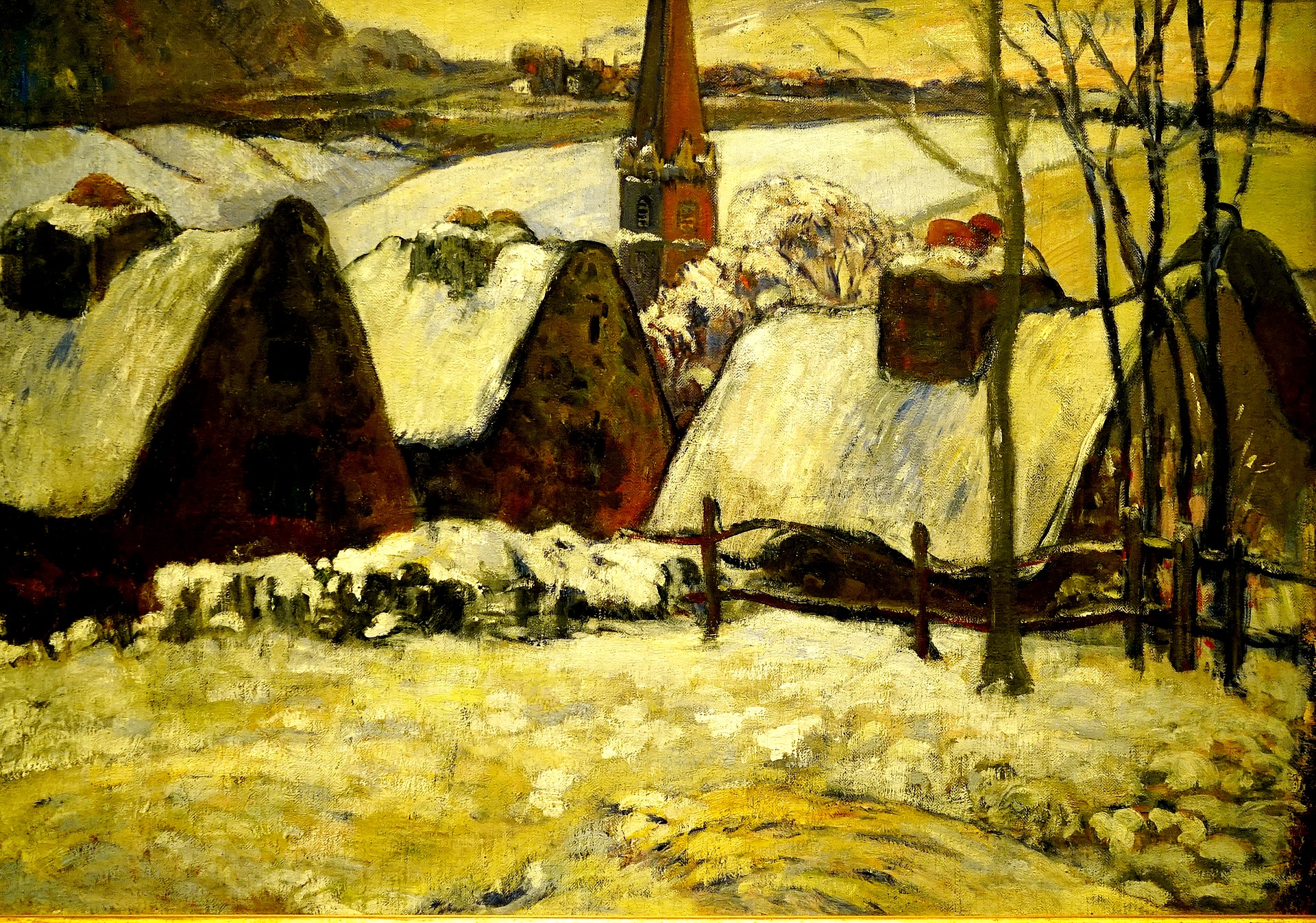
They worked fast, with loose, visible brushstrokes, often painting en plein air (outdoors) to catch the ever-changing light. And guess what? People hated it at first. Critics called their work “unfinished,” “messy,” even “an insult to art.” But today? These paintings are some of the most beloved in history.
Claude Monet – The Master of Light
If Impressionism had a poster child, it’d be Monet. He didn’t just paint scenes—he painted light itself. His famous “Impression, Sunrise” (1872) was so radical that it accidentally named the whole movement (a critic mocked it as just an “impression,” and the artists ran with it).
But his real genius shines in series like “Water Lilies” and “Rouen Cathedral.” He’d paint the same subject at different times of day, showing how light transforms everything. A gray cathedral at dawn becomes a golden spectacle at noon, then a shadowy dream at dusk.Why It’s Brilliant: Monet proves that reality isn’t fixed—it’s a shimmering, ever-changing experience.
Pierre-Auguste Renoir – The Joy of Life
Renoir’s paintings feel like a sunlit afternoon with friends—warm, glowing, full of laughter. His “Luncheon of the Boating Party” (1881) is a masterpiece of casual elegance, with dappled light playing on wine glasses, straw hats, and easy smiles.
Unlike the stiff formal portraits of the time, Renoir’s figures are relaxed, alive. Even his brushstrokes feel breezy, like he’s painting with happiness itself.
Why It’s Brilliant: He turned everyday moments into celebrations.
Edgar Degas – The Poet of Motion
Degas loved dancers—not in perfect, posed glory, but in behind-the-scenes exhaustion, stretching, adjusting ribbons, mid-pirouette. His “The Dance Class” (1874) shows ballerinas in candid moments, their movements almost felt through his sketchy, dynamic strokes.
He also experimented with unusual angles (like looking down from a balcony) and artificial light, making his scenes feel like stolen glimpses.
Why It’s Brilliant: He found beauty in the unposed, the real, the human side of art.
Berthe Morisot – The Quiet Revolutionary
One of the few women in the Impressionist circle, Morisot painted domestic life with astonishing intimacy. Her “The Cradle” (1872), showing a mother gazing at her sleeping baby, is tender yet powerful—a quiet moment made monumental.
Her brushwork was even looser than Monet’s, almost like a whisper. She turned “ordinary” women’s lives into high art when no one else would.
Why It’s Brilliant: She proved that softness could be revolutionary.
(JMW) William Turner RA
Perhaps the daddy of them all. There is plenty of conjecture on this but take a moment to see Rain, Steam and Speed (1844) – painted some 20 years before Impressionism proper, and make your own opinion. The impressionists regularly travel to London and would have no doubt seen Turner’s work of the 1830s and 1840s.
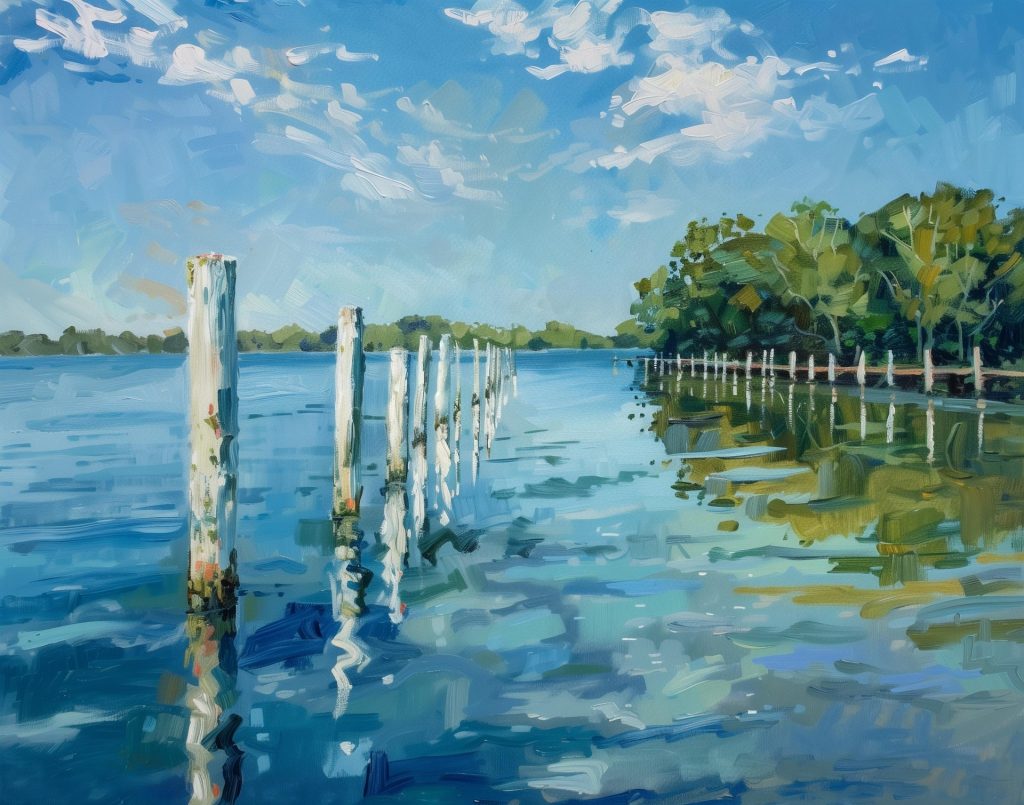
This piece above has been done by AI. It tells us both – how strong the stylistic attributes of Impressionism are able to be described, and also, how good is AI!
Why Impressionism Still Captivates Us
1. It Feels Alive
Unlike the frozen perfection of older art, Impressionist paintings breathe. You can almost feel the sun in Monet’s gardens, hear the chatter in Renoir’s cafés, sense the fatigue in Degas’ dancers.
2. It’s About Experience, Not Perfection
These artists didn’t care if a face wasn’t “finished” or a tree was just a blur of green. They wanted you to feel the scene, not just admire the technique.
3. It Changed Art Forever
Before Impressionism, art was about idealizing life. After? It was about living it. This paved the way for Van Gogh’s wild emotions, Picasso’s fractured perspectives, even modern abstract art.
Try This: See the World Like an Impressionist
Next time you’re outside, squint your eyes slightly. Notice how details blur, colors blend, and light shapes everything. That’s the Impressionist lens—finding magic in the fleeting, the imperfect, the vibrantly real.
So here’s to the rebels who taught us to see differently. Their work wasn’t just pretty—it was a revolution in a paintbox. ?✨
Which Impressionist painting speaks to you? Let me know—I’d love to geek out about it!